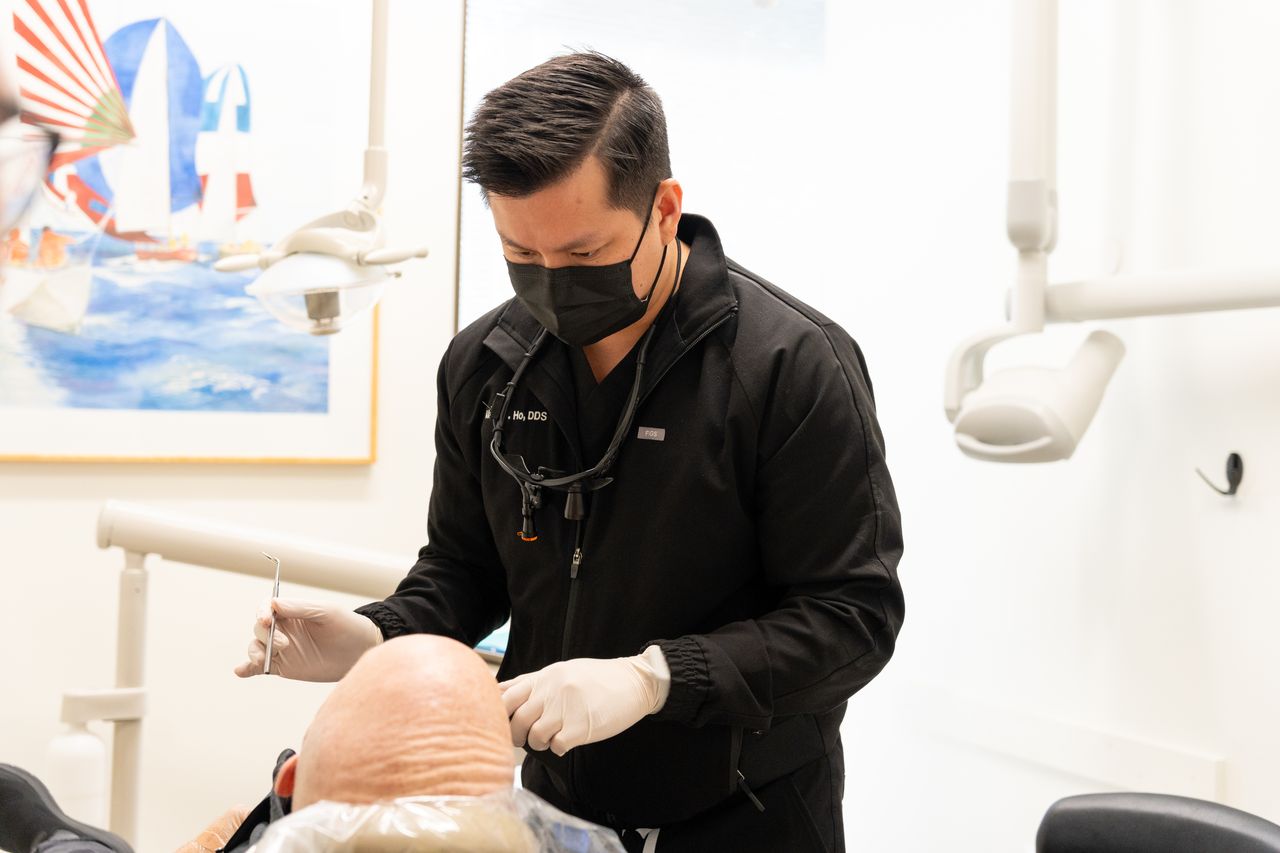
If you’ve been searching for CPAP alternatives in Houston, it’s usually because the machine is already sitting in a closet. You know it wasn’t the answer for you. The question is what comes next — and most people looking for alternatives have no idea that the best one is available from a dentist.
It’s a custom oral appliance. Roughly the size of a retainer, no mask, no hose, nothing to plug in. For the majority of Houston patients who come to us after CPAP, it’s what they end up wearing every night.
It beats CPAP on the only metric that matters
CPAP wins on paper. We’ll say that plainly — for severe apnea, nothing keeps an airway open more reliably.
But treatment doesn’t happen on paper. Between a third and half of CPAP patients quit within the first year, and a machine you don’t use has an effectiveness of exactly zero. The American Academy of Sleep Medicine recommends oral appliance therapy as a first-line treatment for mild to moderate obstructive sleep apnea precisely because compliance is where real-world outcomes are won.
Our patients wear their appliances. Not because they’re more disciplined, but because there’s nothing to tolerate. You put it in and go to sleep.
Where it wins outright:
Travel. It goes in a case the size of a deck of cards. No security conversation, no hunting for an outlet, no unpacking a humidifier in a hotel room. Patients who travel for work tell us this alone changed everything.
Your partner’s sleep. No motor. No air hiss. The person next to you notices the difference before you do.
Intimacy. Nobody brings this up first, but it comes up eventually. A retainer-sized device is a different bedroom experience than a mask and a hose.
Simplicity. Brush it in the morning. That’s the maintenance.
It beats positional therapy on reliability
You’ll see advice about training yourself to sleep on your side, sometimes with a tennis ball or a vibrating sensor.
This genuinely helps a narrow group — people whose sleep study shows apnea that’s much worse on the back. If that’s you, it’s worth doing.
But it depends on staying in a position all night, every night, for the rest of your life, and most people’s apnea isn’t purely positional anyway. An appliance works regardless of how you sleep or which way you roll.
It beats weight loss on timing
We’re not going to talk anyone out of losing weight. It reduces apnea severity for many people and it’s good for you for a dozen other reasons.
But it takes months at best. Sleep apnea itself disrupts the hormones that regulate appetite, making the weight harder to lose. And plenty of lean patients have severe apnea from jaw and airway anatomy that has nothing to do with weight at all.
The real issue is what happens in the meantime. Untreated apnea doesn’t pause while you work on it — every one of those nights is another night of interrupted oxygen. Treat it now, pursue the weight loss alongside.
It beats surgery on reversibility
Implanted nerve stimulators, septum corrections, jaw advancement surgery. These are real options and they work for the right patient.
They’re also permanent, involve genuine recovery, and require specific qualifying criteria. We don’t perform them, and if you need one we’ll point you to the right specialist.
But the sequence matters. An oral appliance is a reversible, non-surgical treatment you can try first — and if it works, which it usually does for mild to moderate apnea, you never need to have the surgery conversation at all.
Want to know if you’re a candidate? Most people are. One short visit and we’ll tell you honestly. Schedule a consultation or give us a call.
It beats the drugstore aisle by a wide margin
Sprays, mouth tape, snoring apps, and boil-and-bite mouthpieces all have one thing in common: none of them treat a collapsing airway.
The boil-and-bite guards are the most misleading, because they look superficially like what we make. They’re not calibrated, they’re not adjustable, and worn nightly for months they can shift your teeth in ways that need orthodontic correction. We’ve fitted patients who came in needing us to undo one.
We go into the full difference between custom and over-the-counter devices in our guide to sleep apnea mouth guards in Houston, along with how fitting works and what to expect on cost.
Is an appliance right for you?
It’s usually an excellent fit if you have mild or moderate obstructive sleep apnea confirmed by a sleep study, if you tried CPAP and couldn’t stick with it, if you travel often, or if you have enough healthy teeth to anchor the device.
It’s the wrong call if your apnea is severe and you’re managing well on CPAP — we’ll tell you that rather than sell you something. Significant tooth loss or certain jaw joint conditions can also rule it out.
If you haven’t had a sleep study yet, that comes first. Most are done at home now rather than in a lab, and the resulting AHI number — how many times per hour your breathing stops — determines what’s appropriate. The National Heart, Lung, and Blood Institute has a clear overview if you want to read up. We coordinate with sleep physicians regularly and can help you get that arranged.
Stop losing nights to this
You’ve probably been tired longer than you’d admit out loud. Another year of “I’ll deal with it eventually” is another year of it.
One consultation tells you whether an oral appliance is right for you. No pressure, and a straight answer either way.
Book your consultation with Henry Smiles Dental — most patients tell us they wish they’d come in sooner.