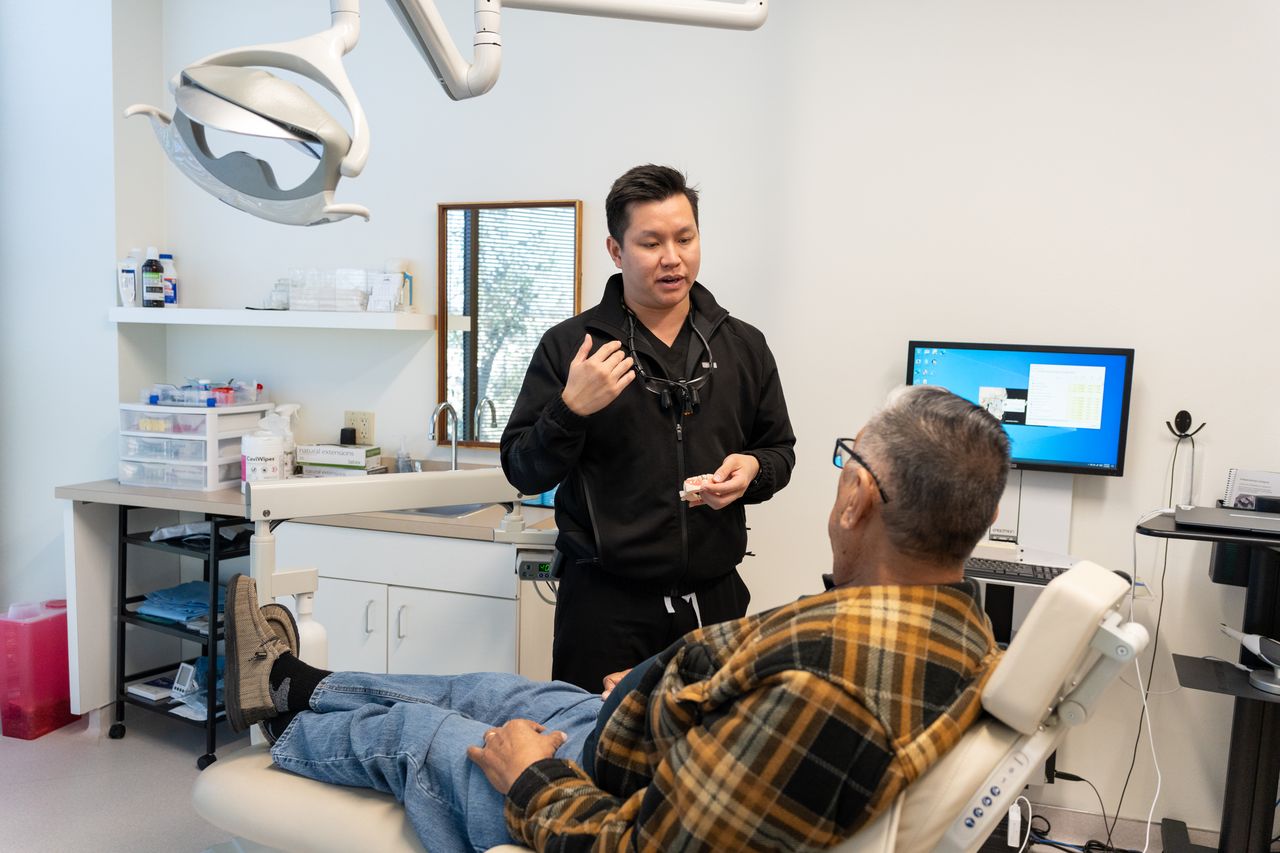
Most people asking about dental implant pain are not really asking about titanium or crowns. They want to know whether dental implant surgery will hurt. They also wonder how much pain to expect after the procedure and whether recovery will disrupt daily life.
For anyone searching “Are Dental Implants Painful? What Patients Really Experience,” the answer is simple. The procedure is usually easier than patients expect. However, the first few recovery days matter. This guide explains what you may feel during placement. It also covers normal soreness, how long dental implant pain lasts, and which factors can affect the experience in Houston practices.
This will eliminate several long sentences while preserving the meaning, keyphrase opportunities, and overall flow. It should also slightly reduce the passive voice percentage.
The Short Answer: What “Pain” Usually Means With Dental Implants
When patients talk about pain, they often describe three different sensations. These include pressure during treatment, soreness after the numbness wears off, and anxiety before the appointment. That distinction matters. Local anesthesia usually prevents sharp procedural pain. However, normal healing can still cause tenderness afterward.
Most patients report little to no pain during implant placement because the area is fully numb. In addition, careful candidate screening helps clinicians identify who may need a modified treatment plan. Online stories often skew negative because people with smooth recoveries rarely post about them. At the same time, dental anxiety can make dramatic accounts seem more common than they actually are.
What Patients Commonly Say After Surgery
A common patient report is that implants feel less intense than a tooth extraction, especially when the site was planned well and infection was absent beforehand. A prosthodontist or implant-focused dentist often hears the same pattern: patients who expected severe pain are surprised that the discomfort feels more like bruised pressure than acute injury.
What You Feel During the Procedure in Houston Clinics
During implant placement, local anesthesia blocks sharp pain. However, you may still notice vibration, pressure, and sound as the implant is placed in the bone. Many patients mistake these sensations for pain. If discomfort occurs, the dentist can usually correct it quickly by administering additional anesthetic.
Sedation dentistry mainly affects awareness rather than tissue response. As a result, it helps reduce anxiety, gag reflexes, and time perception. However, it does not eliminate all post-operative soreness. Procedure length also varies based on the number of implants, extractions, and grafting procedures involved. For that reason, Houston clinicians should check numbness throughout treatment instead of assuming the first injection provides enough anesthesia.
Anesthesia and Sedation Options (What They Change and What They Don’t)
Local anesthesia numbs the surgical site, but you can still perceive pressure, jaw stretching, and instrument vibration. An oral maxillofacial surgeon may also offer oral or IV sedation, which reduces memory and anxiety but does not replace the need for precise local numbing.
What “Minimally Invasive” Placement Can Reduce
Minimally invasive dentistry can reduce tissue disruption, swelling, and chair time when anatomy allows a smaller access approach. Strong treatment planning, especially with digital guides and 3D imaging, matters because fewer surprises during surgery usually translate into a calmer experience and less soreness afterward.
The First 72 Hours: What Recovery Feels Like Day by Day
The first three days shape most of the recovery experience. During this time, patients may notice swelling, tenderness, mild oozing, and occasional bruising. In most cases, soreness peaks between 24 and 48 hours. After that, it should gradually improve rather than worsen.
Certain activities can increase discomfort. These include chewing on the surgical side, skipping ice therapy, sleeping flat, or returning to normal activities too soon. Recovery should move in a positive direction each day. Therefore, pain that becomes worse after initial improvement deserves attention because it may indicate a complication rather than normal healing.
Typical Timeline for Discomfort and Swelling
On day 0, numbness fades and soreness gradually appears, especially when talking or biting. Days 1 through 3 usually bring the most swelling, after which most patients notice steady improvement if they protect the area.
How Long Does Dental Implant Pain Last?
For uncomplicated cases, most discomfort improves significantly within several days, even though osseointegration continues silently for months under the surface. If pain is persistent, sharp, or worsening after early improvement, the answer to how long does dental implant pain last is simple: long enough to justify a call.
Why Pain Happens After Implant Surgery (And What Actually Predicts It)
Pain after implants comes mainly from inflammation, soft-tissue healing, and early bone remodeling, not from the implant “rejecting” the body. That is why mild aching can be normal even when the implant is stable and the surgical site looks healthy.
More involved procedures such as bone grafting, a sinus lift, or multiple implants usually create more soreness because more tissue is manipulated. The strongest predictors of recovery are health status and habits, not supposed pain tolerance, and patients with the most fear often end up using the least medication once they see the discomfort is manageable.
Factors That Can Make Recovery Harder
Smoking and vaping reduce blood flow and increase complication risk, which can delay healing and make tenderness last longer. Uncontrolled diabetes also raises infection risk and slows tissue repair, so medical control often matters more than personality or toughness.
How Post-Op Instructions Change Your Experience
A soft food diet, careful oral hygiene, and temporary activity restrictions reduce swelling and protect the clot and tissues during early healing. Patients who follow instructions closely usually report less throbbing because inflammation responds to behavior as much as to medication.
Pain Management That Works: What Houston Patients Can Do at Home
Most implant discomfort can be managed at home. Patients typically use clinician-recommended over-the-counter pain relievers, rest, hydration, and ice therapy. However, you should not combine medications on your own. The safest pain-management plan depends on your medical history, allergies, and current prescriptions.
Cold therapy works best during the first 24 to 48 hours. In addition, soft foods and keeping your head elevated can help reduce discomfort during the first few nights. Managing dental implant pain at home is usually straightforward. The process becomes even easier when patients prepare before surgery rather than waiting until the numbness wears off.
Medication Basics (OTC vs Prescription)
Many uncomplicated cases can be managed with over-the-counter pain relievers. However, more complex procedures may require prescription medication. Patients who take blood thinners should discuss pain management before surgery. The same applies to people with ulcers, kidney disease, or medication allergies. A customized plan works best when it is created before treatment rather than after discomfort begins.
When to Call Your Houston Implant Team
If you develop fever, foul taste, drainage, severe throbbing, or swelling that worsens after day 3, that is when to call your dentist the same day. Pain that escalates instead of steadily improving is not the pattern clinicians want to see.
Common Myths That Make Implant Pain Seem Worse Than It Is
One of the biggest myths about dental implants is that implant placement is extremely painful from start to finish. In reality, most patients feel pressure and vibration during treatment, then mild to moderate soreness afterward that improves over days, not weeks.
Another myth is that any pain means failure, but normal healing often includes tenderness while bone and gum tissue adapt. Patients looking for additional dental implant information can review educational resources from the American Dental Association.
Why Online Stories Don’t Match Most Real-World Outcomes
Online forums overrepresent difficult recoveries because people post when something goes wrong, not when the week is uneventful. Comparisons also fail because one simple single-tooth implant is not equivalent to full-arch treatment with grafting, sedation, and extensive surgical exposure.
What to Ask at Your Houston Consultation to Reduce Pain and Anxiety
A strong consultation should explain imaging, case complexity, sedation options, oral hygiene after surgery, and the aftercare schedule in plain language. Asking about CBCT or 3D planning matters because better visualization often means more accurate placement, less tissue trauma, and fewer surprises.
Patients should also discuss smoking, diabetes, sleep apnea, and anxiety before surgery because those factors shape the pain-control plan more than many realize. If you are still deciding, resources on dental implants houston, dental implants bone loss houston, and how much do dental implants cost in houston help frame the bigger decision.
Questions That Reveal a Strong Pain-Control Plan
Ask, “What will I feel during placement: pressure, vibration, or sound?” Then ask, “What is your protocol if I feel anything sharp, and who monitors me if I choose sedation?”
Houston-Specific Considerations: Scheduling, Support, and Getting Home Safely
Houston logistics affect comfort more than many patients expect, because stress rises when traffic, delays, and sedation timing are poorly planned. A realistic appointment window, a driver for oral or IV sedation, and a prepared soft-food plan make the first day easier and reduce the chance of skipping medications or a follow-up appointment.
Patients coming from central neighborhoods or outer suburbs should plan travel time generously, especially if weather or freeway congestion is likely. If you are comparing long-term value as well as recovery, dental implants worth it houstonand www.henrysmilesdental.com provide useful local context.
Local Areas Patients Commonly Travel From
Many patients drive in from Midtown, Montrose, Memorial, The Heights, and River Oaks for implant consultations and follow-up care. Others come from Sugar Land, Katy, Pearland, Pasadena, and The Woodlands, which makes transportation planning especially important if sedation is involved.
Key Takeaways: What Most Patients Really Experience
During surgery, numbness prevents sharp pain, and what most people notice is pressure, movement, and sound. After surgery, soreness usually peaks early and improves within days, while osseointegration continues quietly long after discomfort is gone.
The best predictors of comfort are smoking status, diabetes control, case complexity, and how well you follow instructions. A clear plan for sedation, medication, diet, and follow-ups reduces anxiety because uncertainty is often more distressing than the procedure itself.
Simple Next Step
Book a consultation and ask how your specific case changes the expected recovery. Share your full medical history and anxiety level so the team can tailor anesthesia, aftercare, and timing to you.
FAQs
Are dental implants extremely painful?
Most people do not feel sharp pain during placement because local anesthesia numbs the area well. Afterward, soreness and swelling are common, but they are usually manageable and short-lived.
What is the 3 2 rule for implants?
Patients use the “3 2 rule” in different ways, so the term is not universal. It often refers to rough healing milestones such as about 3 days of peak swelling, a few weeks of soft-tissue healing, and months of bone integration.
What I wish I knew before dental implants?
Most patients wish they knew that anxiety is often worse than the actual procedure. They also learn that recovery depends more on smoking, diabetes control, and following instructions than on pain tolerance.
Who is not a good candidate for implants?
People with uncontrolled diabetes, heavy smoking or vaping habits, untreated gum disease, or inadequate bone may not be ideal candidates right away. Many can still qualify after risk factors are treated or grafting options are considered.
A realistic expectation helps more than reassurance alone: dental implant surgery is usually a pressure-and-soreness experience, not a severe-pain experience. When the case is planned well and recovery instructions are followed, most Houston patients find the process far more manageable than they feared.