
You spit after brushing and see pink in the sink. Maybe it happened once and you forgot about it, or maybe it has happened every morning for a month. Bleeding gums bring plenty of Houston patients to our office, and nearly all of them want to know one thing first: is this serious?
It depends on how long the bleeding has lasted and what else is going on in your mouth. Most cases start with plaque along the gumline, which responds well to treatment when it’s caught early. Others mean gum disease has already moved below the gums. This guide will help you figure out which situation you’re in.
The Short Answer on Bleeding Gums
Healthy gums don’t usually bleed from normal brushing and flossing. Bleeding means the tissue is inflamed, and the usual cause is gingivitis, the earliest stage of gum disease. Gingivitis is reversible.
If gentler brushing and daily flossing stop the bleeding within about two weeks, early gingivitis was the likely cause. If the bleeding keeps going, or you notice any of the warning signs below, schedule an exam.
Common Reasons Gums Bleed That Often Settle Quickly
You just started flossing again. Gums that haven’t been flossed in a while are usually inflamed between the teeth, so they bleed at first. Keep at it. With daily flossing, the bleeding often fades within one to two weeks as the tissue calms down. If you stop because of the bleeding, the inflammation stays.
You brush too hard. Scrubbing with firm pressure or a hard-bristled brush irritates gum tissue and can wear it back over time, which is one of the causes of gum recession. A soft brush with light pressure cleans your teeth just as well.
You changed your routine. A new brush, flosser, or technique can leave your gums tender for a few days while they adjust.
To test it, brush gently for two minutes twice a day with the bristles angled toward the gumline, and floss once a day for 14 days. Clear improvement is a good sign. If nothing changes, it’s time to have your gums checked.
Other Things That Can Make Gums Bleed
Some health factors make gums more likely to bleed even when your habits are good.
- Pregnancy. Hormonal changes make gums react more strongly to plaque, so pregnancy gingivitis is common. Keep up with your dental visits and let your dentist know you’re pregnant.
- Medications. Blood thinners, including daily aspirin, can make gums bleed more easily. Never stop a prescribed medication on your own. Tell your dentist what you take so they can factor it in.
- Diabetes. Poorly controlled blood sugar raises the risk of gum disease and slows healing.
- Smoking. Smoking reduces blood flow to the gums, so smokers often bleed less even when gum disease is present. A lack of bleeding doesn’t prove your gums are healthy.
- Vitamin deficiencies. Low vitamin C or vitamin K can contribute to bleeding, though this is uncommon in people who eat a varied diet.
Signs Your Bleeding Gums Point to Gum Disease
Gum disease is often painless, which is why many Houston patients with bleeding gums wait too long to address it. Watch for these signs:
- Bleeding that lasts longer than two weeks despite good home care
- Red, swollen, or tender gums
- Bad breath or a bad taste that keeps coming back
- Gums pulling back from the teeth, making teeth look longer
- Teeth that feel loose or a bite that feels different
- Pus between the teeth and gums
If any of these sound familiar, book an exam. Once the problem moves below the gumline, home care alone can’t reach it.
Gingivitis vs. Periodontitis: Why the Difference Matters
According to the National Institute of Dental and Craniofacial Research, gum disease is an infection of the tissues that hold your teeth in place, and it usually begins with red, swollen, bleeding gums. What happens next depends on whether it stays at the gumline or moves deeper.
Gingivitis is inflammation limited to the gums. No bone has been lost, and a professional cleaning plus consistent home care can fully reverse it.
Periodontitis develops when that inflammation moves below the gumline. Bacteria collect in pockets between the gums and teeth, and the bone that holds your teeth in place starts to break down. Bone loss from periodontitis can’t be undone, but treatment can stop it from getting worse.
Dentists grade periodontitis in four stages. Stage I is early, with minor bone loss. Stage IV is the most advanced, with significant bone loss, loose or missing teeth, and changes to how you chew. Earlier stages need simpler treatment, so it pays to get bleeding gums checked early.
When Bleeding Gums Call for a Doctor Visit Too
Most bleeding gums come from plaque and inflammation. In rare cases, though, bleeding gums are one of the first visible signs of a problem elsewhere in the body, such as a blood clotting disorder or leukemia.
Call your physician as well as your dentist if you notice:
- Heavy bleeding that starts suddenly or won’t stop with light pressure
- Easy bruising, frequent nosebleeds, or small red spots on the skin
- Unusual fatigue, fever, or infections that keep coming back
- Gums that swell quickly without an obvious reason
- A sudden increase in bleeding while you’re taking a blood thinner
These cases are rare, but they’re worth a call to your doctor.
What a Houston Dentist Will Do for Bleeding Gums
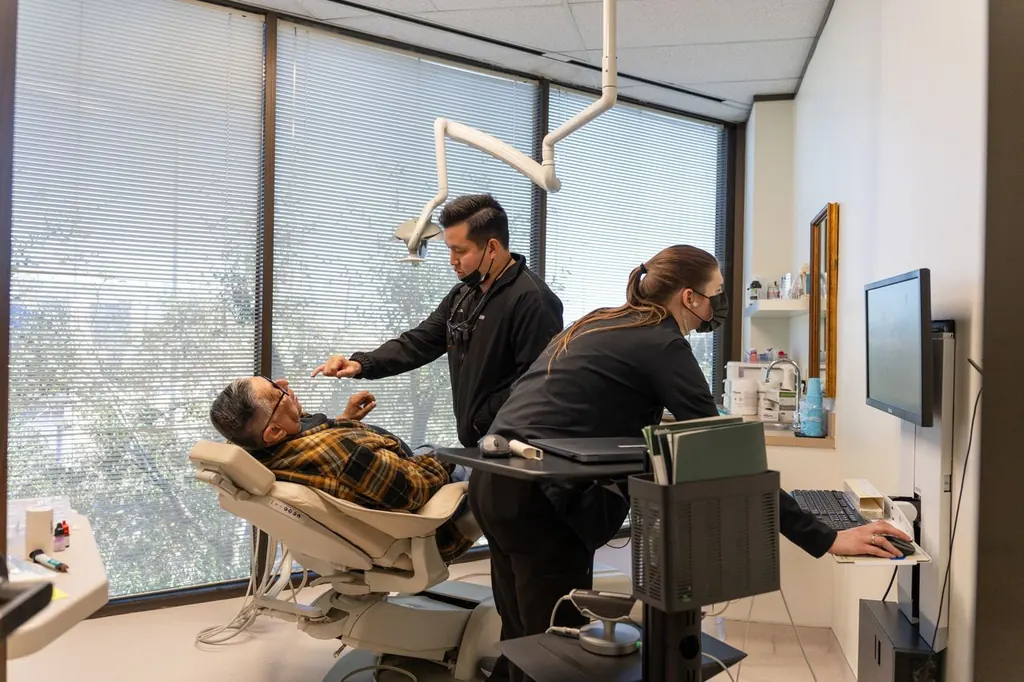
A visit for bleeding gums in Houston, or anywhere else, should start with measurement.
The exam. Your dentist or hygienist uses a small probe to measure the space between each tooth and the gum around it. Healthy pockets measure about 1 to 3 millimeters, and deeper readings suggest periodontitis. X-rays show whether any bone has been lost, and a review of your health history and medications fills in the rest.
Treatment depends on the findings:
- Gingivitis: a professional cleaning, coaching on brushing and flossing technique, and a follow-up to confirm the bleeding has stopped.
- Periodontitis: scaling and root planing, often called a deep cleaning, which removes buildup from below the gumline and smooths the root surfaces so the gums can reattach.
- After a deep cleaning: periodontal maintenance visits, usually about every three months, to keep the disease under control.
- If your gums have receded: a conversation about gum recession treatment options.
Not everyone with bleeding gums needs a deep cleaning. Your pocket measurements and X-rays should drive that decision. If a dentist recommends one, you have every right to ask to see your readings and have them explained.
What You Can Do at Home This Week
While you wait for your appointment, these habits give bleeding gums the best chance to settle down:
- Use a soft-bristled toothbrush and light pressure.
- Brush for two full minutes, twice a day, angling the bristles toward the gumline.
- Clean between your teeth every day with floss, interdental brushes, or a water flosser.
- Keep flossing even if you see some bleeding at first.
- Avoid tobacco, which slows gum healing.
- Write down your medications so you can share the list at your visit.
Getting Bleeding Gums Checked at Henry Smiles Dental
If you’re dealing with bleeding gums in Houston that have lasted more than a couple of weeks, or you’ve noticed any of the warning signs above, our team can help you find out what’s going on. We’ll measure your gums, review your X-rays, and walk you through what the numbers mean before recommending anything. Some patients leave with a cleaning and a few technique tips, while others need periodontal treatment. Either way, we’ll explain what we found.
Henry Smiles Dental is located at 9601 Katy Freeway, Suite 360, Houston, TX. Contact our office to schedule a gum health exam.
Frequently Asked Questions About Bleeding Gums
Why are my gums suddenly bleeding badly?
Sudden bleeding usually follows a change such as restarting flossing, brushing harder, a new medication, or pregnancy. Heavy bleeding that won’t stop, or bleeding along with bruising, fatigue, or fever, calls for a prompt visit to your physician.
Can bleeding gums heal on their own?
Gingivitis can reverse with better brushing and flossing, often within a couple of weeks. Periodontitis won’t clear up on its own because the buildup sits below the gumline, where a toothbrush can’t reach.
Should I stop flossing if my gums bleed?
No. Bleeding from flossing usually means the gums are already inflamed. Gentle daily flossing helps reduce that inflammation, and the bleeding typically eases within one to two weeks.
What is stage 4 gum disease?
Stage IV periodontitis is the most advanced form of gum disease. It involves significant bone loss and often loose or missing teeth. It requires comprehensive periodontal treatment and, in some cases, tooth replacement.
What will a dentist do for bleeding gums?
For bleeding gums, a Houston dental office will start with a gum exam and pocket measurements, plus X-rays if needed. From there, the treatment plan might be a regular cleaning, a deep cleaning, or ongoing periodontal maintenance.